









Orlando Vieira Balla, the self-made man
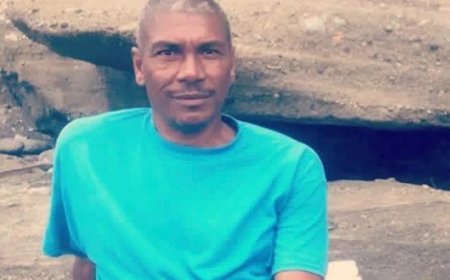
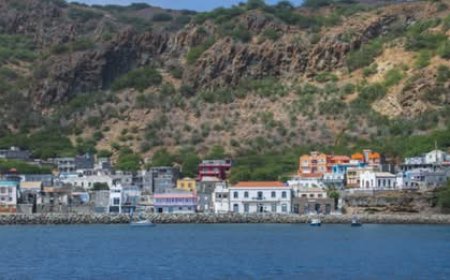
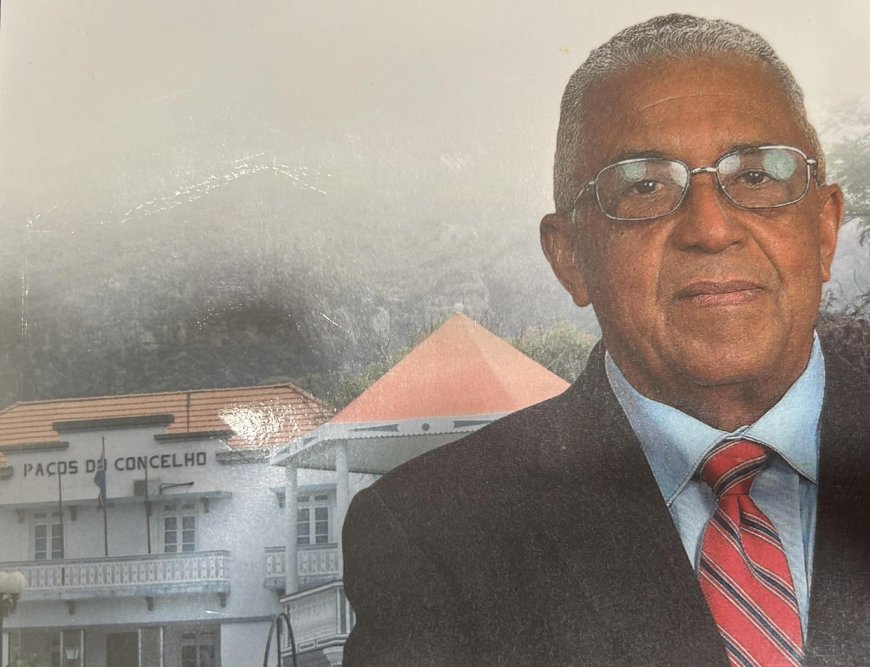
Orlando da Luz Vieira Balla was born on April 29, 1951, in the quiet village of Laranjeira, in the parish of Nossa Senhora do Monte, which was once the episcopal seat of Brava Island.
His father, Belmiro Teixeira Balla, was a man of refined manners and much loved by the community. Like his son Orlando, he held public office. He served as head of the Civil Registry Office and, concurrently, as “Defender of the Accused” (now known as public defender) and Notary Public—roles that earned him respect and admiration.
His mother, Maria da Luz Vieira, a hardworking woman, devoted her entire life to rain-fed agriculture, convinced that work brings dignity. She instilled in her only son, Orlando, high values and ethical and moral principles inspired by her Christian faith. On Sundays, she never missed Mass.
At the Nossa Senhora do Monte Elementary School, Orlando completed the fourth grade, and that was as far as he went. The family could not afford to send him to São Vicente or Portugal to continue his studies, as was customary at the time, especially among wealthier families.
But as a teenager, he heard that it was easy to find work aboard foreign ships docking at the port of Dakar, in neighboring Senegal. He then began to hope that he could return to school to build a better life. And he decided to leave.
His father, who had never given in to the temptation to emigrate, and his mother advised against this decision, believing their son was too young to face, alone, the challenges of a life far from the comfort of home, but they were persuaded by their son’s arguments.
Thus, in June 1968, at just 17 years old, Orlando Balla would leave his homeland. A life on the open sea awaited him, but he would not let himself be overcome by the pain of homesickness. On the contrary. Through his own merit and with great effort, he would become a respected professional, a “self-made man.”
Dakar would be merely the gateway to more desirable destinations. The Netherlands, Germany, and Norway were Orlando’s top choices, but his ultimate destination was the United States of America—a land of opportunity for those willing to fight for success, as his uncles and brothers who lived there had told him. Orlando Balla would, however, have to wait three years to reach his destination of choice.
In Dakar, six months after arriving, he landed his first job as a steward on a German ship owned by the Hugo Stiness company. He worked as a cleaning assistant on that vessel, which, less than a year later (June 1969), he would trade for a Dutch ship owned by the Royal Netherlands Steam Ship Company, adding the position of second mate to his duties as a steward just a few months later.
In June 1971, he would finally disembark in the United States of America, the destination of so many other people from Brava like himself. In Pawtucket, Rhode Island, he worked as a machine operator for about three years, first at ATT and then at Healthtex. He also worked as a truck driver for three months after obtaining his driver’s license, which was no easy feat.
But it was at the American oil company Esso/Exxon Corporation that, starting in 1974, Orlando Balla would build his career in the maritime department, rising through various positions until he reached the role of coordinator/manager—or Mooring Master—in the transportation office of one of the company’s oil bases off the coast of Angola, where his primary responsibility was to ensure compliance with international maritime laws and operational safety, as well as coordinating, guiding, and piloting the oil tankers that transported oil to various parts of the world.
Orlando Balla, who while working for Esso/Exxon Corporation also served as the liaison between ship officers and local officials to ensure authorization for entry into and exit from the country and the clearance of cargo, managed in 1978 (ten years after leaving Brava Island with only a fourth-grade education) to resume his studies. And so, at age 27, he obtained his High School Equivalency in Providence, also in the state of Rhode Island...
in high school), in accordance with the continuing education regulations in effect in the United States of America.
The Baltimore School of Navigation, in the state of Maryland, would become his place of study in 1980. He would graduate from there in 1990 with the rank of captain. He would also add to his resume a pilot’s license to operate in Prince William Sound, Alaska, as well as a Deputy Harbor Pilot license for the ports of Miami and Fort Lauderdale, both in Florida, after passing the exams with distinction. However, he was never able to find employment at the ports of Fort Lauderdale and Miami.
In 2010, after 36 years of service, Orlando Balla would see his tenure with Esso/Exxon Corporation come to an end. The time had come to change course and explore new opportunities, taking advantage of the chance to benefit from early retirement. Moreover, the call of his beloved Brava had become irresistible.
Throughout his years abroad, he visited the island whenever opportunities and circumstances allowed. In 1982, he made his first trip to the island after 14 years in the U.S. and decided that from then on he would return every two years. Life did not allow it to be that way, but Brava remained alive in his heart—a memory nourished by the vivid recollections of his life on the island during his childhood and adolescence.
In 2004, upon returning to the island, he made a promise to himself that would once again change the course of his life: he would never again be away from Brava for long periods of time. He was driven by a desire to help his fellow islanders make the most of their abilities and talents, and to stimulate Brava’s economy and society toward full development.
That is why, when he received an invitation from some Brava residents affiliated with the MpD to run for mayor of Brava, he accepted it with conviction—despite his lack of political experience—but not without first giving it careful thought and consulting his family. After all, his candidacy would bring drastic changes and enormous challenges for him and his family, who reside in the United States of America.
In 2012, after a closely contested election and a significant number of votes for the ticket he headed, Orlando Balla was elected Mayor of Brava, becoming the first former emigrant to be elected mayor of a municipality in Cape Verde. He took office on August 14 of that year, beginning a journey that left an indelible mark on the island—a legacy recognized by the people of Brava, who, in September 2016, re-elected him to a second term with a strengthened majority of the votes.
However, aware that public office is not permanent, and determined to keep his goal of fighting for a better future for his homeland intact, Orlando Balla created the Brava Solidária Foundation in 2013. He was—and still is—driven by the desire to give the young people of Brava what he himself, Orlando Balla, did not have: financial aid for their education. The foundation subsidizes the studies of several young people from Brava at universities based in Cape Verde to help them attain a level of knowledge that will enable them to make a positive difference for their homeland.
Text taken from the book *Para Brava Pela Brava*, by Orlando Balla